Ranch Tips
Keeping Your UTV and Crew Cool in Summer Ranch Work
Ranch & UTV Supply · October 25, 2026
Summer is hard on people and machines alike. Long hours at low speed in tall grass, heavy loads and 100°F afternoons push CVT belts, cooling systems, batteries and riders to their limits. These tips cover keeping the machine healthy and keeping the people on it safe.
Protect the rider first
Heat illness is a real risk on a UTV. You feel cooler while moving, but that breeze disappears every time you stop to open a gate, fix a fence or feed. The CDC lists these warning signs:
• Heat exhaustion: heavy sweating, cold clammy skin, nausea, headache, dizziness and fast weak pulse. Get into shade, loosen clothes, sip water and cool the skin.
• Heat stroke: body temperature of 103°F or higher, hot red skin that may be dry, confusion or passing out. This is a medical emergency. Call 911 and cool the person right away.
Practical habits:
• Drink water often instead of waiting until you are thirsty, and add electrolytes on long days.
• Plan the heaviest work for early morning and evening.
• Tell someone your route, and carry a phone or radio.
Shade and airflow in the cab
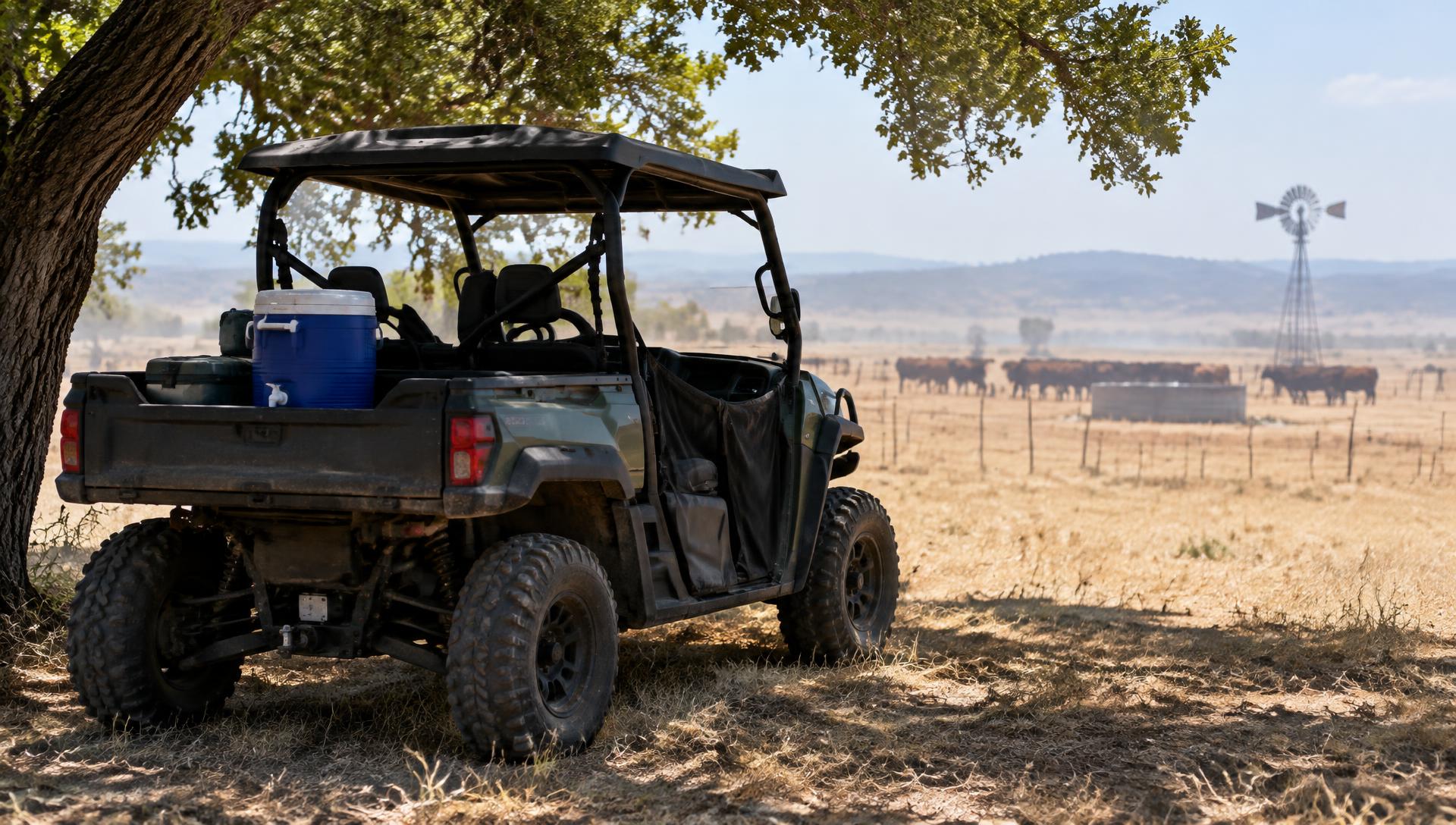
• A roof blocks direct sun on the seats, controls and you. It is the single biggest comfort upgrade for summer.
• A roof fan keeps air moving when you are working at walking speed. Our dual 8-inch roof fan with LED dome lights is made for roofs about 41 inches wide. Check your roof width before ordering.
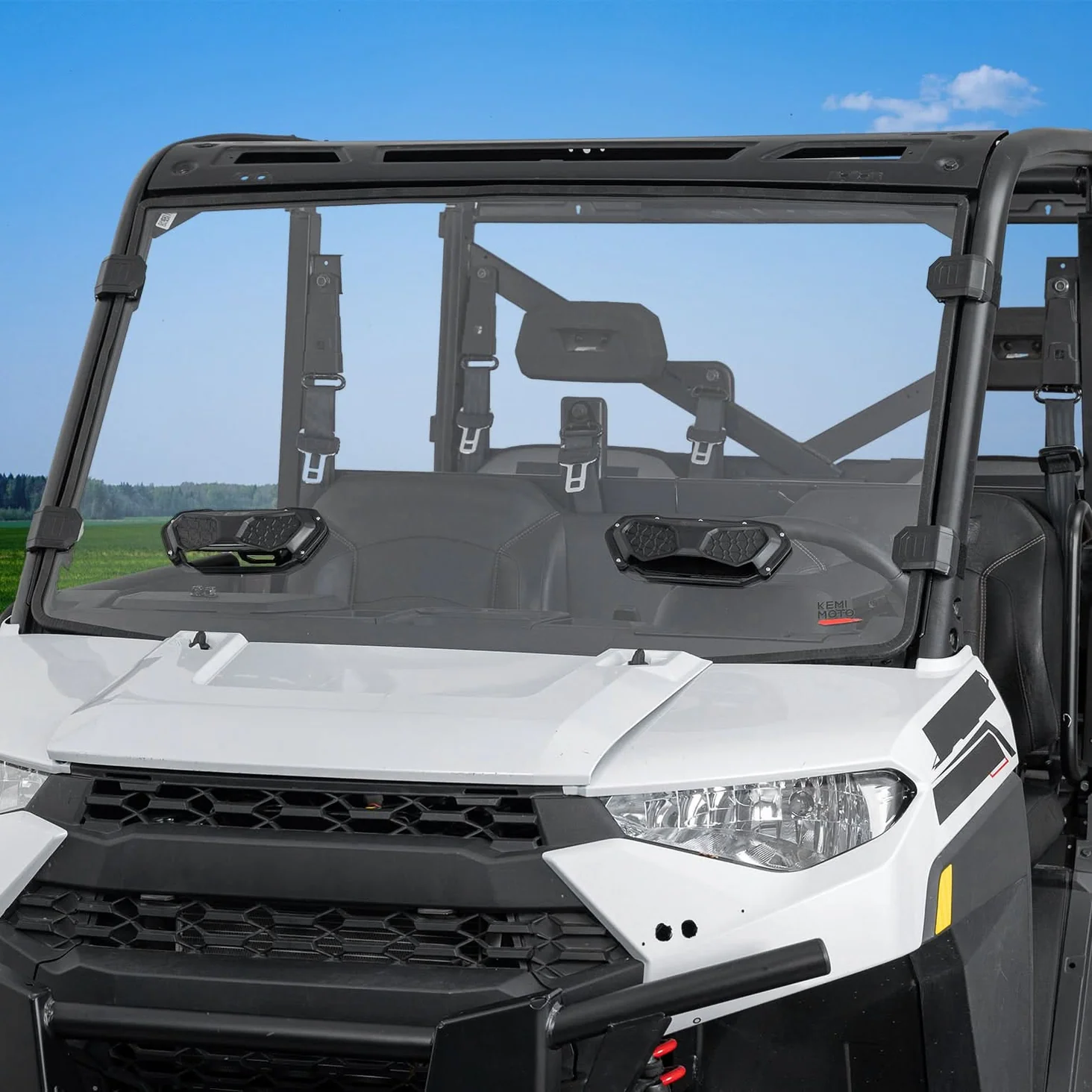
• A vented or flip-up windshield lets you open the front for airflow in the afternoon and close it for dust or a passing storm. See our windshield review.
Keep the cooling system clean
Grass seed, chaff and mud pack into radiator fins faster in summer than any other time.
1. Check the radiator screen daily when working in grass or hay. Clean it after every dusty day.
2. Wash fins from the engine side out with low-pressure water so you push debris out instead of packing it deeper. Do not bend the fins.
3. Check coolant level in the overflow tank when the engine is cold, and look at hoses for cracks.
4. Listen for the fan. If the temperature light comes on and the fan is not running, stop and check the fuse and connector before going on.
Take care of the CVT belt
CVT belts are the most common summer failure. Heat breaks down belt rubber, and the hottest belt is a slipping one.
• Use low range whenever you are hauling, pulling a trailer, going under about 7 mph, climbing, or loading onto a trailer. Low range keeps the belt fully engaged instead of slipping.
• Avoid riding the brake and throttle together and long idling in gear.
• Let the machine idle for a minute after a hard run before shutting off, so the clutch cover can shed heat.
• Carry a spare belt and the tools to change it. Our belt changing tool is made for the Can-Am Maverick X3.
• If the clutch cover gets wet from a creek crossing, drain it before going on. Many machines have a drain plug.
Battery and electrical
Heat speeds up battery aging more than cold does. In summer:
• Check terminals for corrosion and keep them tight.
• If the machine sits between jobs, use a battery tender.
• Wire accessories like fans, light bars and sound bars through key-switched, fused circuits so nothing drains the battery while parked in the heat.
Tires and fire risk
• Check tire pressure in the morning while tires are cold. Hot tires read high.
• Dry grass touching a hot exhaust can start a fire. Do not park over tall dry grass. Clean packed grass off the skid plate and exhaust area, and carry a small fire extinguisher during burn bans and drought.
A summer checklist
Daily: radiator screen clear, coolant level checked, water and phone on board, exhaust area clear of grass.
Weekly: wash radiator fins, inspect the CVT belt and clutch intake, check battery terminals and charge, check tire pressure and the plug kit.
For model-specific setups, see our UTV setup guides by vehicle and our fence line check tips.
Frequently asked questions
+Does low range help a UTV in hot weather?
Yes. Low range keeps the CVT belt fully engaged when hauling, towing, climbing or driving slower than about 7 mph. That cuts belt slip and heat, the main cause of summer belt failures.
+How often should I clean the radiator in summer?
Check the screen every day in grass or hay, and clean it after any dusty or grassy day. Wash the fins from the engine side out with low-pressure water.
+What are the signs of heat stroke?
According to the CDC: body temperature of 103°F or higher, hot red skin that may be dry, confusion, or passing out. Call 911 and cool the person right away.
+Can a UTV start a grass fire?
Yes. A hot exhaust touching dry grass can start a fire. Do not park over tall dry grass, clean packed grass off the skid plate, and carry a fire extinguisher during drought.
+Will a roof fan fit my UTV?
Check your roof width. Our dual 8-inch roof fan is made for roofs about 41 inches wide. The product page lists compatible models.
Gear from this guide
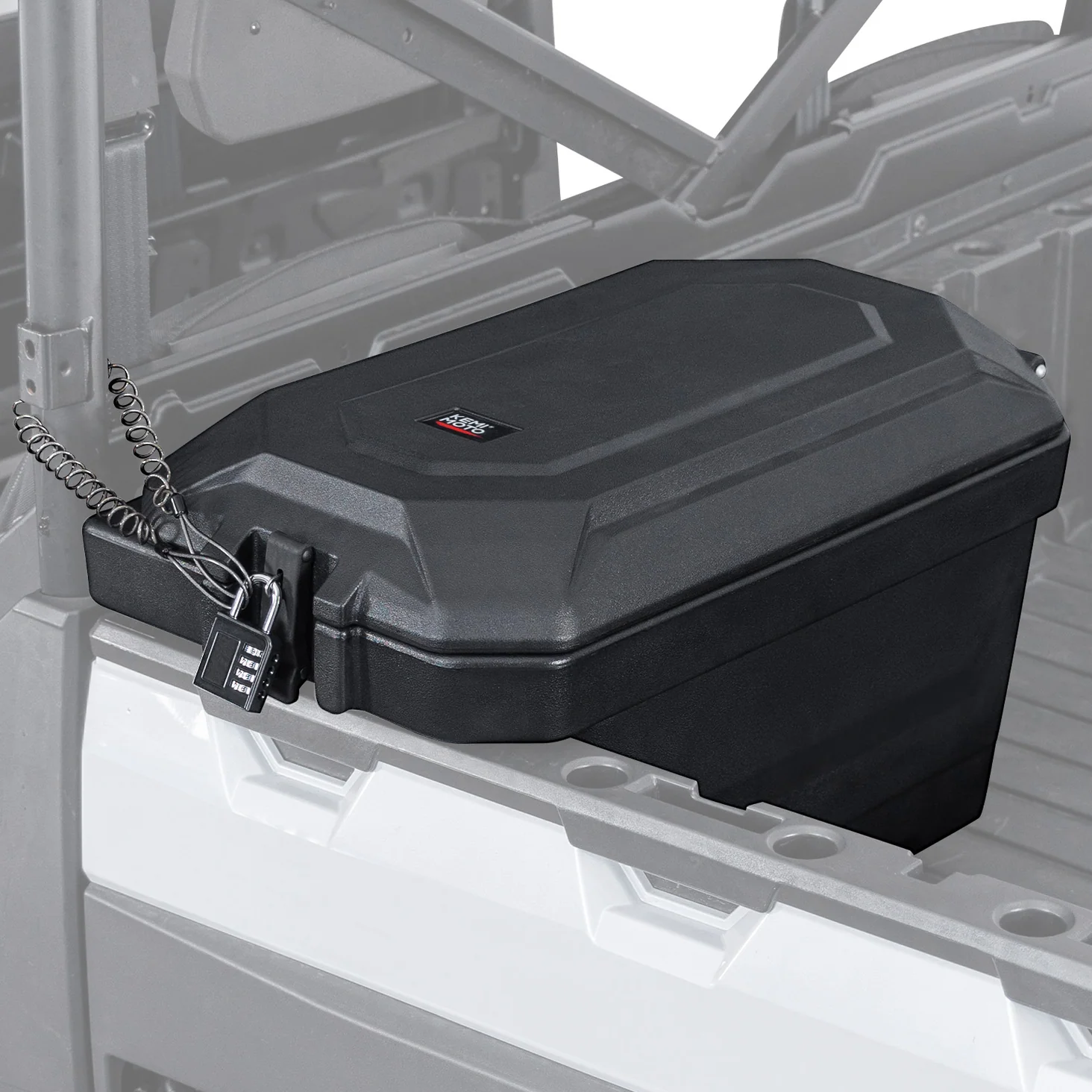
45L Storage Box, Left Side, for Polaris Ranger 1000, 900, 570, 700 and XP 1000
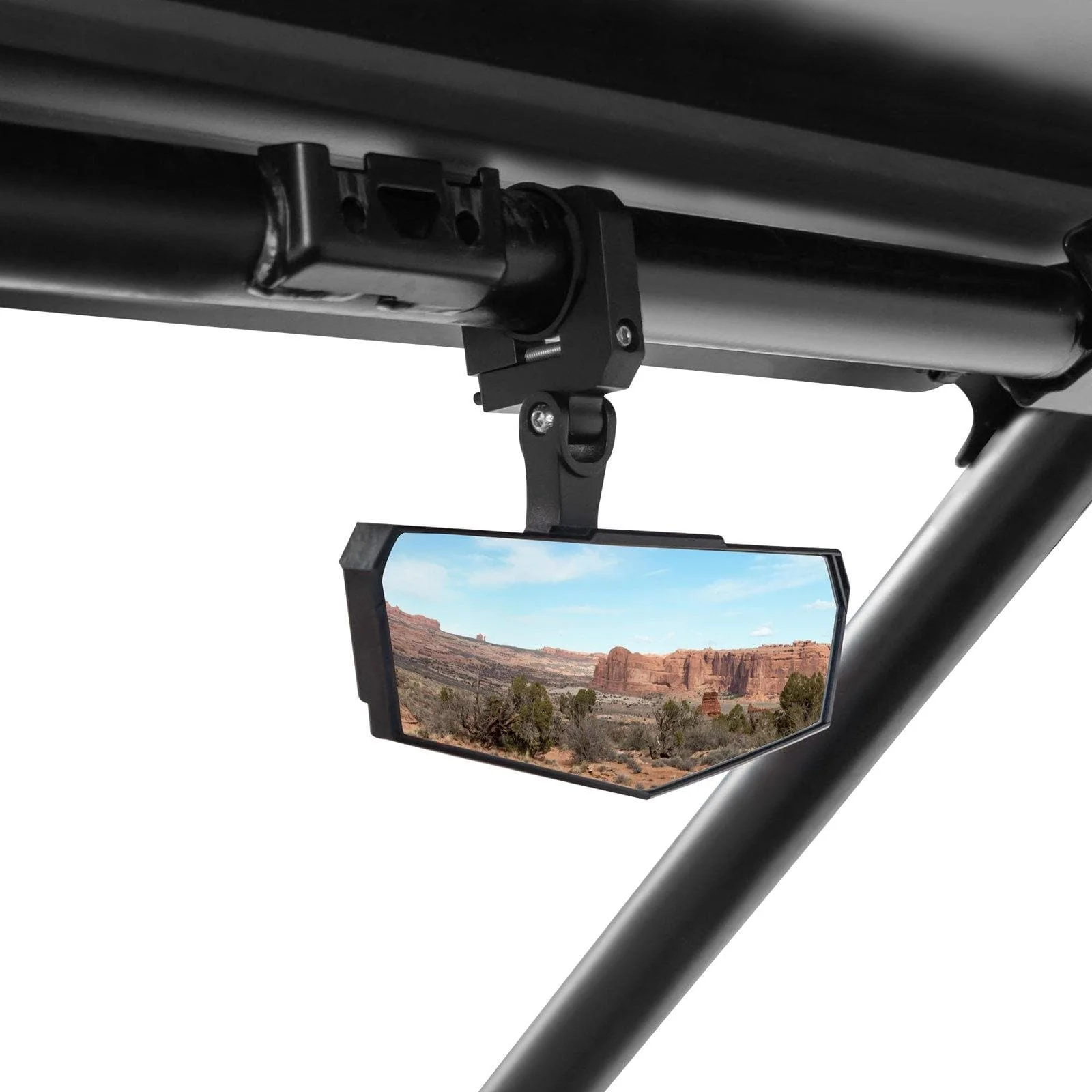
1.5-inch to 2-inch Rearview Mirror for RZR, Pioneer, Talon, X3, CFMOTO and Kawasaki
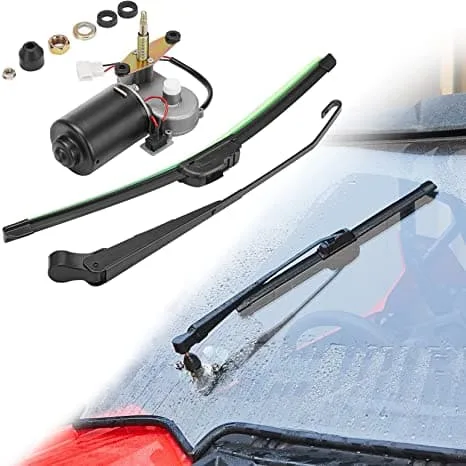
12V Electric Windshield Wiper Kit for Most UTVs